
Kayak Fishing at Dawn, Dusk and Night: Why the Right Fishing Light Matters
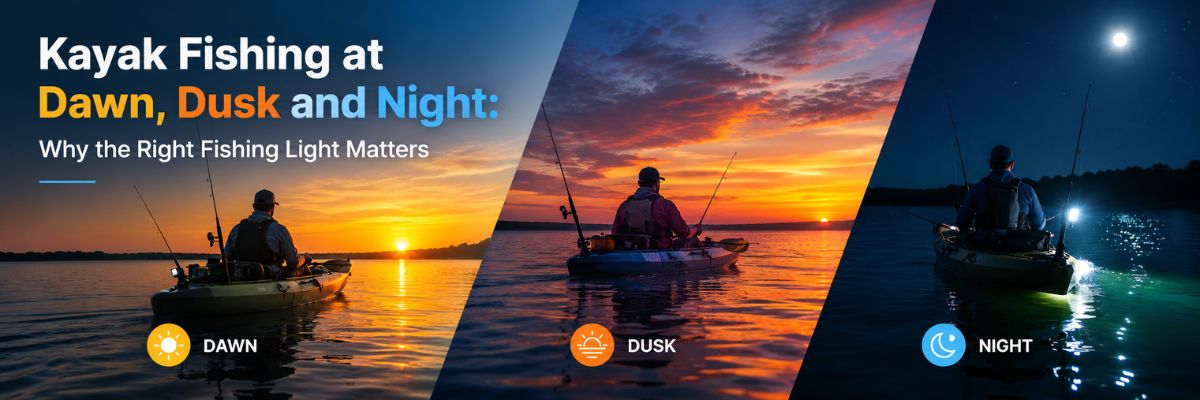
Kayak fishing doesn't have to stop when the sun goes down. In fact, dawn, dusk and nighttime can offer some of the most interesting fishing conditions. Cooler temperatures, lower light levels and changing fish behaviour can create opportunities that aren't always available during the middle of the day.
However, fishing in low-light conditions requires more preparation. Visibility becomes limited, navigation needs greater attention and every piece of equipment needs to be easy to use. One of the most useful additions to a night-fishing setup is a reliable fishing light.
For anglers using Kayaks and Fishing kayaks, choosing the right lighting system can improve visibility, make equipment easier to manage and add an extra layer of safety when fishing around sunrise, sunset or after dark.
Why Fish at Dawn, Dusk and Night?
Many anglers prefer daytime fishing because visibility is better and conditions are generally easier to manage. But low-light fishing has its own advantages.
At dawn and dusk, changing light conditions can influence fish activity. Some species become more active during these transition periods, while other fish may feed more confidently in lower light.
Night fishing can also provide a completely different experience. Waterways can become quieter, temperatures may be more comfortable and areas that receive heavy daytime fishing pressure can feel very different after dark.
For kayak anglers, however, preparation is essential. Once natural light disappears, visibility becomes one of the most important considerations.
Why Is Lighting Important on a Fishing Kayak?
A fishing kayak has limited space. Unlike a larger boat, there isn't a large deck with plenty of room to move around.
At night, finding tackle, checking equipment, handling a fishing rod or moving around the kayak can become more difficult.
A suitable lighting setup can help you:
- See your fishing equipment
- Find tackle more easily
- Check your kayak and equipment
- Handle fish safely
- See around your immediate fishing area
- Make your position more visible when appropriate
- Navigate more confidently around the kayak
Lighting should therefore be considered part of the overall kayak setup rather than simply an optional accessory.
Different Types of Fishing Lights
There isn't one type of light that works for every situation. Kayak anglers may use several different lighting options depending on where and how they fish.
LED Fishing Lights
LED technology is commonly used for outdoor and marine lighting because it can provide bright illumination while using relatively little power.
A compact LED light can be useful around the kayak for illuminating the cockpit, tackle area or immediate surroundings.
When choosing an LED light, consider brightness, power consumption, mounting options, waterproofing and battery requirements.
What Is an Underwater LED Fishing Light?
An Underwater LED Fishing Light is designed to operate below the surface of the water.
Unlike a conventional light mounted above the kayak, an underwater light directs illumination through the water. Depending on the design and fishing environment, this can create an illuminated area around or beneath the kayak.
Underwater lighting can be particularly interesting for anglers who fish after dark and want to experiment with attracting or observing activity around the kayak.
However, underwater lights should be used according to the manufacturer's instructions. Check the recommended installation depth, waterproof rating, power requirements and mounting method before placing a light in the water.
Why Use an Underwater Fishing Light?
One of the interesting characteristics of underwater lighting is the way light interacts with the water.
An underwater LED can illuminate the surrounding water and create a visible area below the kayak. Depending on local conditions, water clarity and the species being targeted, this may make the area around the kayak more interesting for fishing.
The effectiveness of underwater lighting can vary considerably. It should not be treated as a guaranteed way to attract fish.
Water depth, clarity, weather, current, species and local fishing conditions can all influence the results.
For anglers who enjoy experimenting with night fishing, however, an underwater LED fishing light can be an interesting addition to their equipment.
Choosing the Right Colour
Some underwater and fishing lights are available in different colours.
Common options may include:
- White
- Green
- Blue
- Other specialised colours
Different colours can produce different visual effects in the water, but there isn't a universal colour that works best in every fishing situation.
The choice can depend on the target species, water conditions and the type of fishing being undertaken.
Rather than assuming one colour will always attract more fish, anglers can experiment with different options and observe how fish respond in their particular environment.
Power Consumption Matters
Lighting adds another demand to your kayak's electrical system.
This is especially important when you already use a fish finder, GPS or other electronics.
Before choosing a light, check its power consumption and compare it with your available battery capacity.
For example, a compact LED light used occasionally may have relatively little impact on battery runtime. A powerful light operating continuously for several hours will require considerably more energy.
If you are already using a dedicated battery for your fish finder, consider whether the light should have its own power source or be connected to a larger kayak power system.
Waterproofing Is Essential
Fishing kayaks spend their entire lives around water, so lighting equipment needs to be designed for the environment in which it will be used.
When comparing fishing lights, look for information about:
- Waterproof rating
- Maximum operating depth
- Cable protection
- Connector protection
- Mounting system
- Battery enclosure
An IP rating can provide useful information about resistance to dust and water, but always check what the specific rating means for the product.
A waterproof light does not automatically mean that every part of the installation is waterproof. Connectors, switches and cable entry points also need to be protected.
Lighting for Safety and Lighting for Fishing
It is important to distinguish between fishing lights and navigation or safety lighting.
An underwater LED fishing light may be designed primarily for illuminating the water or creating a fishing setup. It should not automatically be considered a replacement for legally required navigation lights or other safety equipment.
If you're fishing at night, check the applicable local boating and navigation requirements for your location.
Your kayak should remain visible to other water users, and you should carry appropriate safety equipment for the conditions.
Lighting at Dawn
Dawn can be one of the best times to be on the water.
Launching before sunrise means you may need artificial lighting while preparing the kayak, loading equipment and reaching your fishing location.
A small LED light can be particularly useful during this period.
As natural light gradually increases, the need for artificial illumination decreases. This makes dawn fishing a good example of why a compact, easy-to-control light can be more practical than an unnecessarily large lighting system.
Fishing at Dusk
Dusk presents the opposite situation.
You may start fishing in daylight and gradually transition into darkness. This means your equipment needs to work well in changing conditions.
Before the light disappears completely:
- Check your battery
- Test your lights
- Organise your tackle
- Confirm your navigation equipment
- Secure loose equipment
- Make sure your phone is accessible
- Check your safety equipment
Preparing before it becomes completely dark is much easier than trying to organise equipment after visibility has already dropped.
Night Fishing Requires Better Organisation
A tidy kayak becomes even more important after dark.
Something that is easy to find during daylight can become surprisingly difficult to locate when you can't see clearly.
Keep commonly used items in consistent locations.
For example:
- Tackle in an organised storage box
- Pliers in an accessible holder
- Headlamp within reach
- Spare batteries stored securely
- Fishing rods positioned safely
- Phone and communication equipment protected
- Essential safety equipment immediately accessible
Good organisation reduces unnecessary movement around the kayak.
Don't Forget Your Headlamp
A kayak-mounted or underwater light should not be your only source of illumination.
A headlamp can be extremely useful because it follows where you're looking.
It can help when:
- Changing fishing tackle
- Removing hooks
- Handling fish
- Checking equipment
- Moving around the kayak
- Launching or landing in low light
Keep a backup light or spare power source available whenever possible.
Battery Planning for Night Fishing
Night fishing can increase your power requirements because lighting is added to the equipment you normally use.
Your electrical setup may include:
- Fish finder
- GPS
- Underwater LED
- Cockpit lighting
- Headlamp
- USB devices
- Navigation lights
Before heading out, estimate how long each device will operate and make sure you have sufficient battery capacity.
For electronics such as fish finders and small lights, a properly sized lithium battery can provide a lightweight power solution. Higher-capacity batteries may be required for setups that also include a trolling motor.
The important thing is to match battery capacity to the equipment rather than automatically choosing the largest battery.
Saltwater Fishing and Light Maintenance
Saltwater can be hard on electrical equipment.
After fishing in saltwater, inspect your lights, cables and connectors for signs of corrosion or water ingress.
Where appropriate:
- Rinse equipment according to the manufacturer's instructions
- Dry connectors before storage
- Inspect cables for damage
- Check mounting hardware
- Look for corrosion around terminals
- Store batteries correctly
Regular maintenance can help extend the useful life of your lighting system.
What Should You Look for in a Fishing Light?
Before purchasing a light for your kayak, consider these factors:
Brightness
Choose enough light for the task without unnecessarily increasing power consumption.
Battery Life
Check how long the light can operate on a full charge or battery.
Waterproofing
Look for a suitable water-resistance rating and check any depth limitations.
Size
A compact light is often easier to install and store on a kayak.
Mounting
Make sure the light can be securely mounted without interfering with paddling, pedalling or fishing.
Power Requirements
Check whether the light uses its own battery or connects to your kayak's electrical system.
Durability
Fishing equipment needs to withstand movement, splashes, transport and outdoor conditions.
Safety Should Always Come First
Night fishing can be enjoyable, but reduced visibility introduces additional risks.
Before heading out, consider:
- Weather conditions
- Wind
- Tides and currents
- Water temperature
- Your experience level
- Communication options
- Navigation equipment
- Required safety equipment
- Local boating regulations
Avoid going farther offshore simply because your lighting setup makes it possible to fish after dark.
Always plan your return before losing daylight.
Final Thoughts
Fishing at dawn, dusk and night can give anglers a completely different experience on the water. But reduced natural light means that preparation becomes much more important.
For anglers using Fishing kayaks, a well-planned lighting setup can make equipment easier to manage while improving visibility around the kayak. An Underwater LED Fishing Light can also add another option for anglers interested in experimenting with nighttime fishing.
The best setup depends on your fishing environment, target species, kayak and equipment. Consider lighting, battery capacity, waterproofing, mounting and safety together rather than choosing a light in isolation.
With the right preparation, Kayaks can be equipped for comfortable and organised low-light fishing sessions—whether you're launching before sunrise, staying out through sunset or enjoying a full night on the water.